Synopsys Fusion Compiler Engineer Jobs: One Flow, RTL to GDS
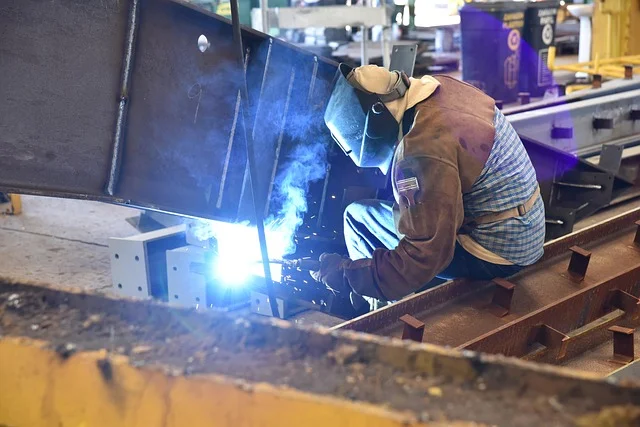
Synopsys built Fusion Compiler to erase the handoff between synthesis and place-and-route. Instead of writing a netlist out of Design Compiler and hoping ICC2 can close it, one tool runs both engines against a shared data model. That shift changed what hiring managers ask for. They want someone who is thinking about placement while the design is still being mapped.
The job title varies by team. Some post it as physical design, some as implementation, some as RTL-to-GDS. The common thread is Fusion Compiler Tcl plus at least one block carried from elaboration to routed, signed-off GDS that still has to clear Calibre DRC physical verification before tapeout.
Day to day you own the implementation scripts: constraint setup, floorplan and macro placement, concurrent synthesis and placement, clock tree synthesis, routing, and in-design PrimeTime analysis so the timing you see in the tool matches the golden signoff flow. When QoR slips, you are the person who works out whether it came from the constraints, the floorplan, the library, or a tool setting nobody documented.
This is where physical design and ASIC synthesis stop being separate careers. Engineers arriving from either side show up with a predictable gap. Synthesis people underestimate congestion. Physical design people underestimate how much a better constraint can do before placement ever starts. Closing your own gap takes most of the first year.
Interviews lean hard on one question: which blocks have you taken through the tool yourself, and what did the QoR look like when you started versus when you signed off. Vague tool familiarity does not survive that conversation. A single documented block, with the congestion problem you hit and the constraint change that fixed it, does.
Demand sits at 7nm and below, where physical effects dominate and the old netlist handoff leaves real PPA on the table. Apple, Nvidia, AMD, Qualcomm, and Broadcom all run Synopsys-primary implementation flows on their leading-edge parts. AI accelerator startups hire for it too, usually because they cannot afford the schedule risk of two separate timing closure loops.
Pay tracks physical design with a premium for advanced-node tapeout history. Mid-level roles in the US commonly post at $150K to $190K base, staff at $210K to $270K base, with equity pushing total compensation well past that at large fabless companies. Our salary guide breaks the ranges down by level and region.
Save a search on semidesignjobs.com and you will get an email when a Fusion Compiler role matching your filters opens.
FAQ
What does Fusion Compiler give you that a separate DC and ICC2 flow does not
Synthesis and placement run concurrently, so the mapper makes decisions with real placement awareness. That removes the QoR gap between a synthesis-optimized netlist and post-route timing, which cuts closure iterations and improves final PPA. The advantage grows at advanced nodes, where physical effects drive most of the difference between an optimistic netlist and routed silicon.
Does Fusion Compiler replace Design Compiler and ICC2
At advanced nodes, yes, that is how Synopsys positions it. DC and ICC2 remain supported for mature-node designs and for teams that have not migrated. The Fusion Compiler scripting interface closely resembles ICC2, so engineers with solid ICC2 experience usually port their flows without starting over.
Which designs benefit most
High-frequency digital blocks with hard timing closure, designs under tight PPA budgets, and anything at 7nm, 5nm, or 3nm. Simpler blocks at mature nodes often see little QoR gain over a conventional DC and ICC2 flow, which is why plenty of teams still run both methodologies side by side.