GPU Design Engineer Positions: Find Graphics Chip Roles
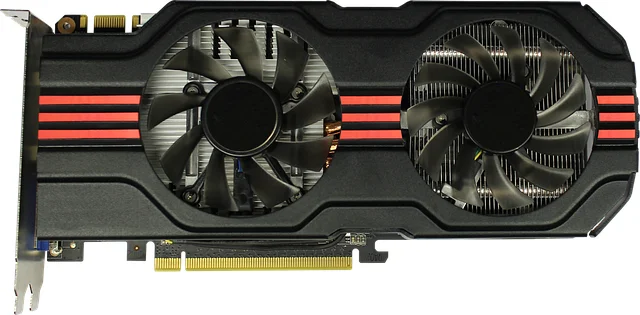
Demand for GPU silicon talent has concentrated sharply over the past few years. Nvidia, AMD, Apple, Qualcomm (Adreno), Arm (Mali), Intel Xe, and a growing set of AI chip startups are all staffing GPU design teams, driven by AI training and inference workloads that have reshaped what modern GPU silicon needs to do.
Open positions span compute shader cores, memory controllers, texture and rasterization units, display engines, and video encode/decode accelerators. The common thread across these roles is RTL design for high-throughput parallel compute pipelines, often targeting 5nm or 3nm process nodes. SIMT microarchitecture experience and GPU memory hierarchy knowledge, covering cache coherency, bandwidth management, and HBM interfacing, are the differentiators in competitive senior hiring. Familiarity with CXL is increasingly relevant as AI accelerators adopt cache-coherent memory attach for host-to-device memory sharing.
GPU work differs from CPU design engineer roles in a fundamental way: CPU architects optimize for single-thread latency and branch prediction accuracy, while GPU architects design for massive parallelism across thousands of execution units. Senior GPU engineers often specialize further into either the compute pipeline (shader cores, tensor units) or the graphics pipeline (rasterization, texture filtering, display output).
Nvidia and AMD pay staff and principal GPU design engineers total compensation in the $300K–$420K range. Apple IC design roles carry significant equity tied to A-series and M-series silicon cycles. AI chip startups typically offer base salaries of $180K–$260K alongside early-stage equity. The semiconductor design salary guide breaks down compensation by role and seniority.
For candidates with parallel datapath or high-bandwidth memory interface experience, ASIC design engineer jobs often overlap with GPU-specialized roles more than the titles suggest.
Save a search on semidesignjobs.com filtered to your preferred company type, seniority, and location. When a matching GPU design position opens, you'll get an email before the role fills.
FAQ
What makes GPU design engineer positions different from CPU design roles?
GPU design focuses on massive thread-level parallelism, executing thousands of threads simultaneously for data-parallel workloads, while CPU design optimizes for low-latency single-thread performance. GPU architectures feature thousands of simpler compute units alongside specialized texture and rasterization logic.
How is AI driving demand for GPU design engineer positions?
Large language model training and inference have made GPU compute the most-demanded resource in tech. This has sharply increased hiring at traditional GPU companies like Nvidia and AMD, and at hyperscalers building custom GPU-like AI accelerators.
Is graphics API knowledge required for GPU design engineer positions?
Understanding Vulkan, DirectX 12, or Metal helps GPU design engineers anticipate workload behavior, but deep API expertise matters more for driver software engineers. RTL design, microarchitecture, and hardware performance modeling are the primary requirements for design roles.